
Delta
Optimized Cabin Cleaning Dispatching System
Timeline
Jan 2025 — May 2025
Role & Team
Zikki: Product Designer, Yiran Wang: Product Designer, Shujian Xu: Product Designer
Responsibility
UX Research · Sketching · Prototyping · Design Iteration
Disciplines
Research: Literature Review · Research Plan · User Interview · Journey Map · Stakeholder Map
Design: Design Iteration · Prototyping · Interaction Design
Tool: Figma
Overview

This project reimagines Delta Air Lines’ aircraft cleaning dispatch system, evolving it from a manual workflow into an automated and centralized dashboard that enhances communication between dispatchers and cleaners. The system supports Delta’s 2050 Net-Zero Carbon Emission goal.
Problem
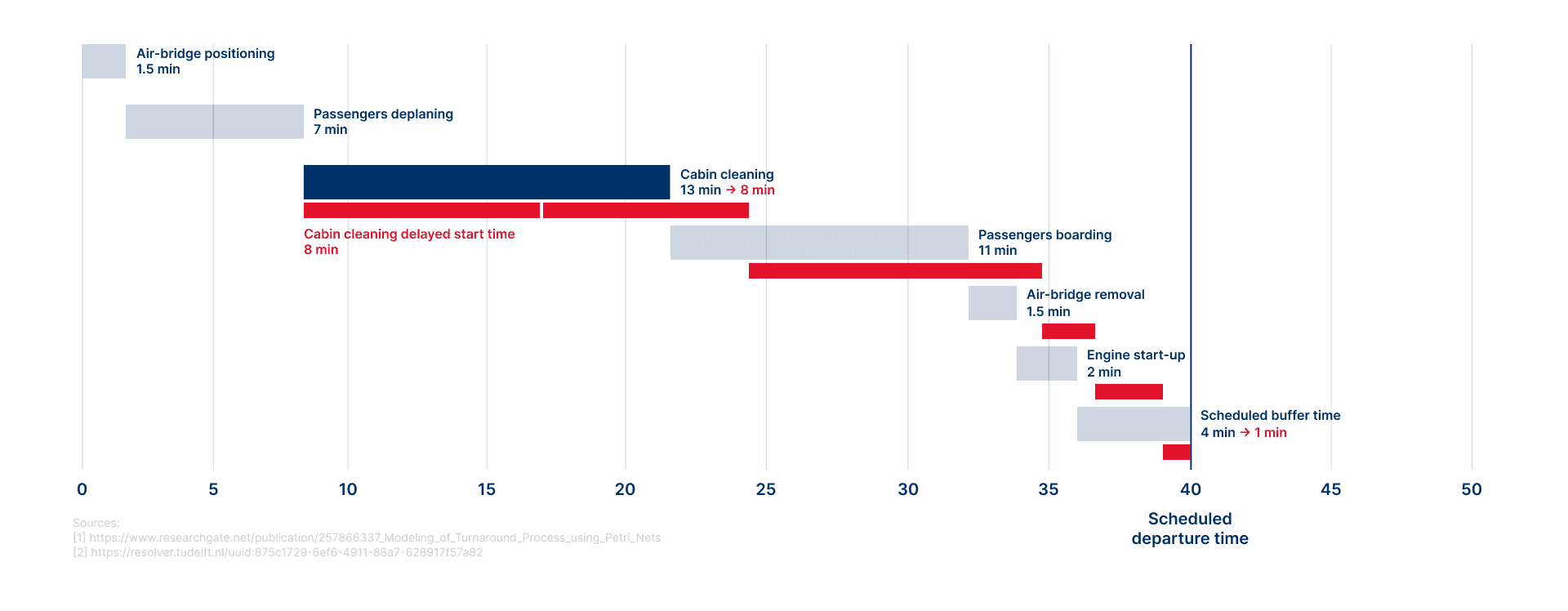
“Every extra minute an aircraft remains on the ground consumes fuel, increases carbon emissions, and reduces revenue.”
Cabin cleaning is a key task within the turnaround process’s critical path. Delays in cleaning directly extend the overall turnaround time. Current manual dispatching and inefficient communication between dispatchers and cleaners often lead to delays in cabin cleaning, which impact customer satisfaction, aircraft utilization, and raises CO₂ emissions.
Solution
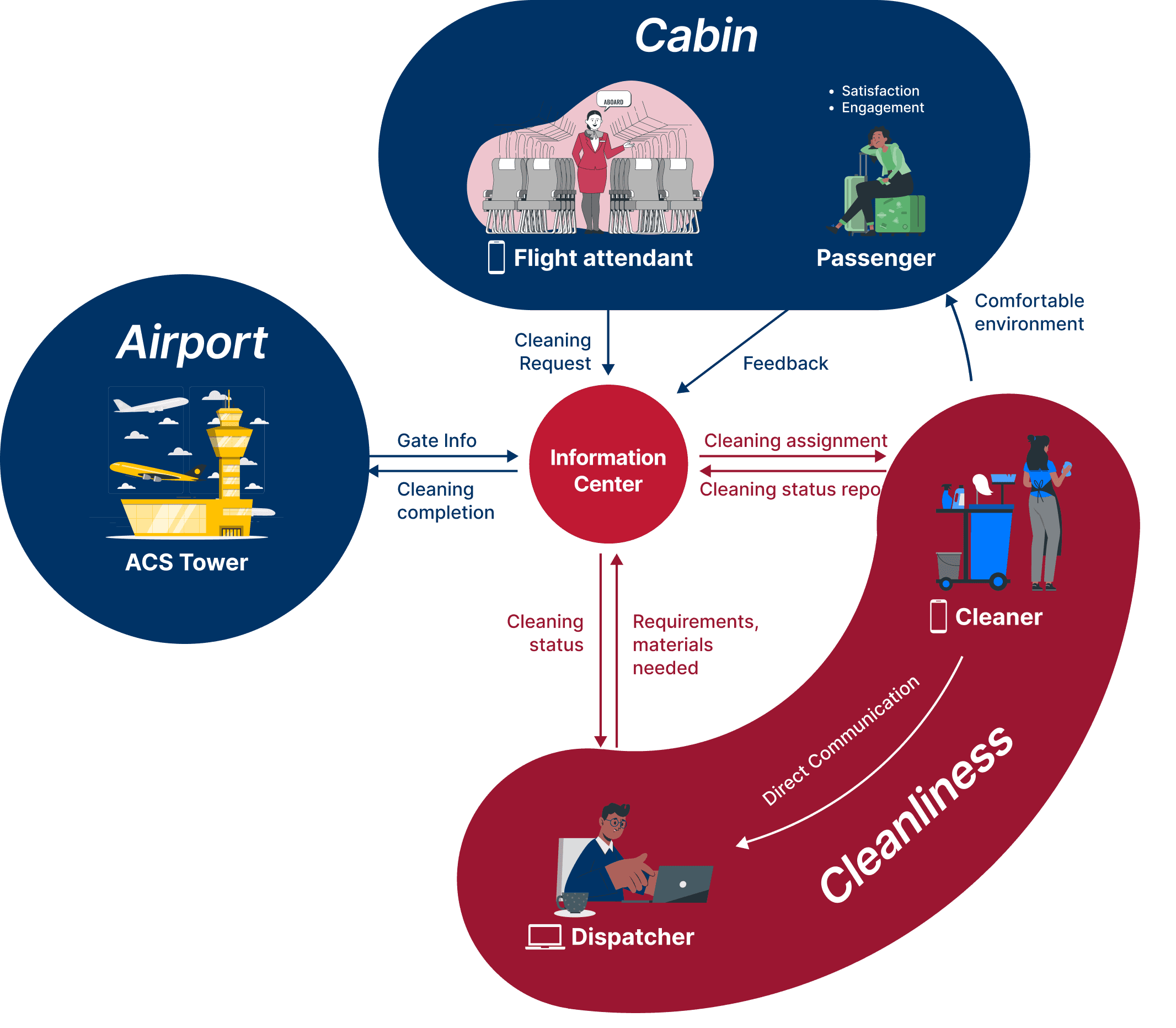
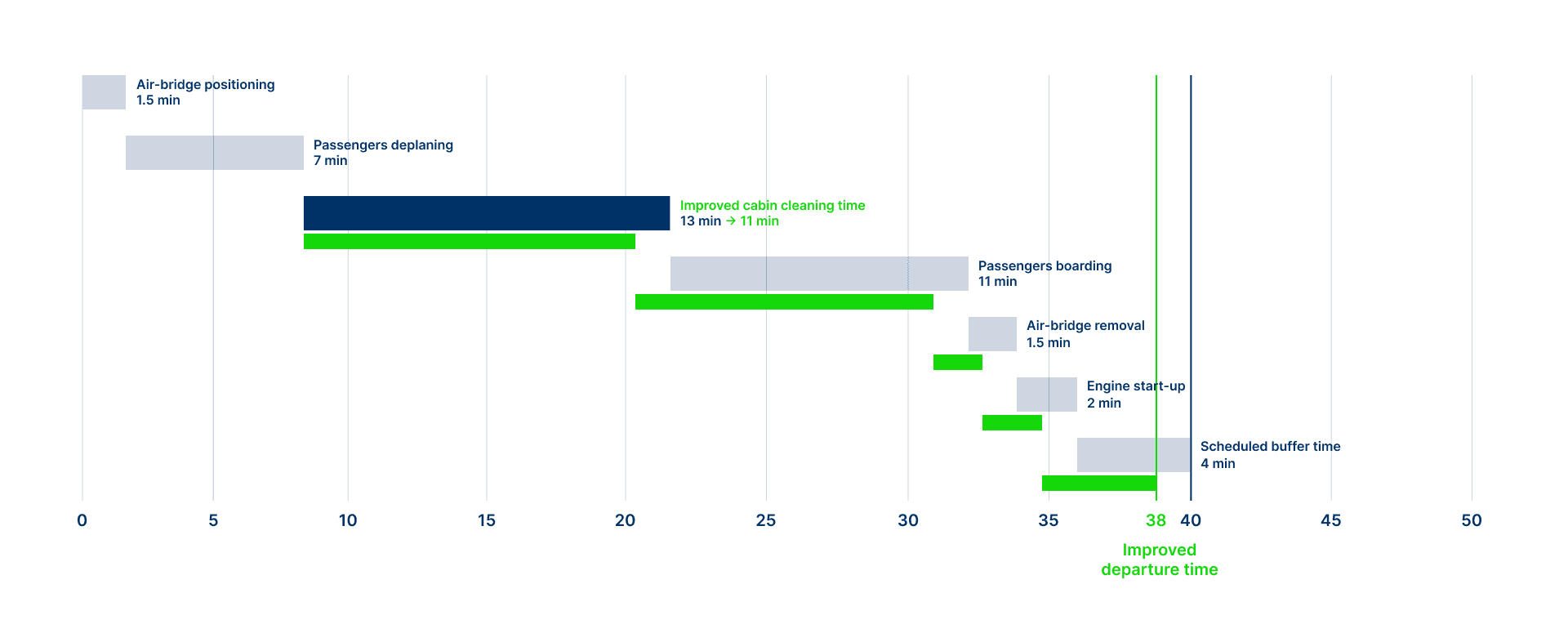
An automated dispatch system that synchronizes real-time status and streamlines communication between dispatchers and cleaners to shorten turnaround time and reduce CO₂.
Impact
Outcome
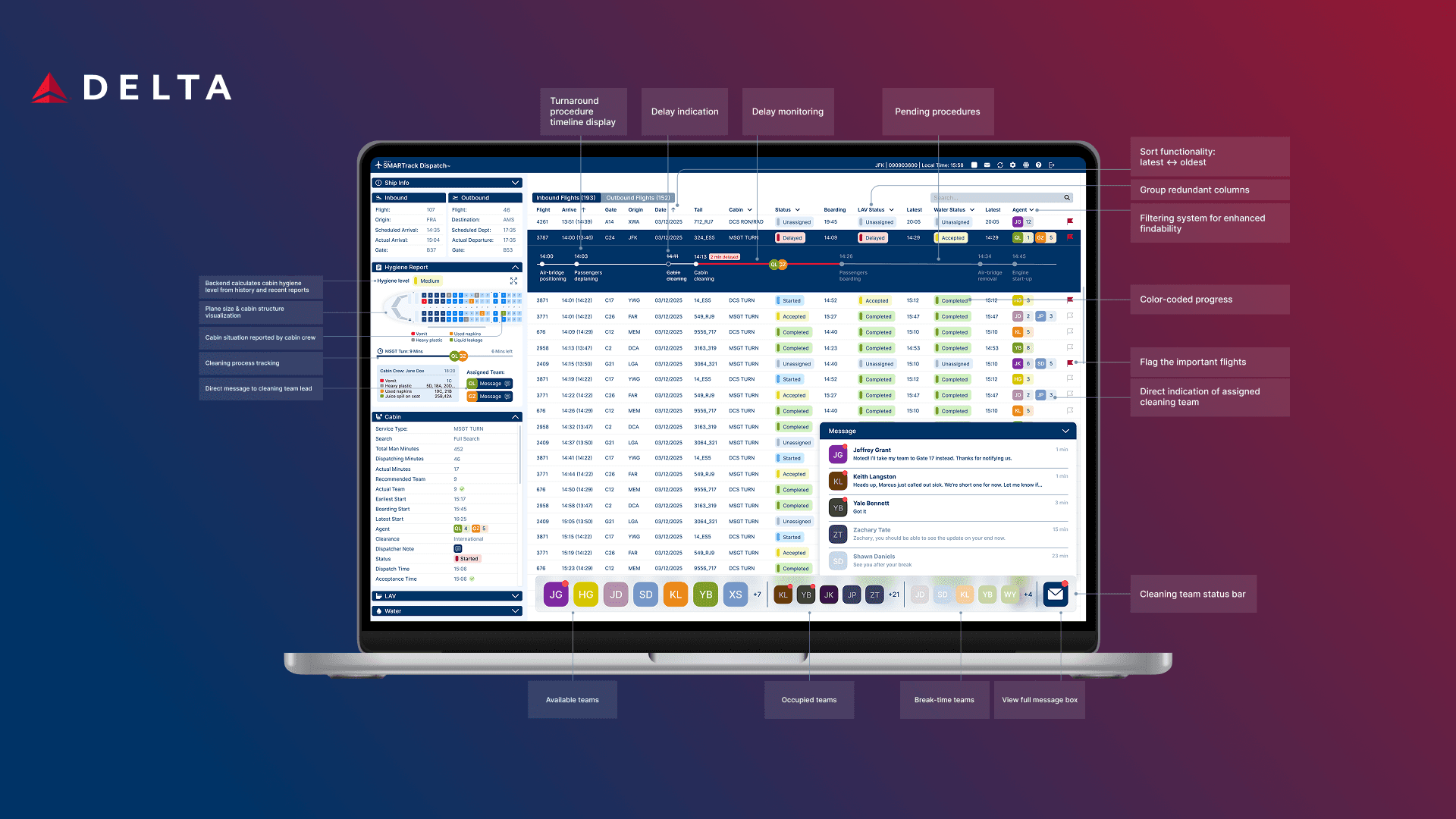
Before & After
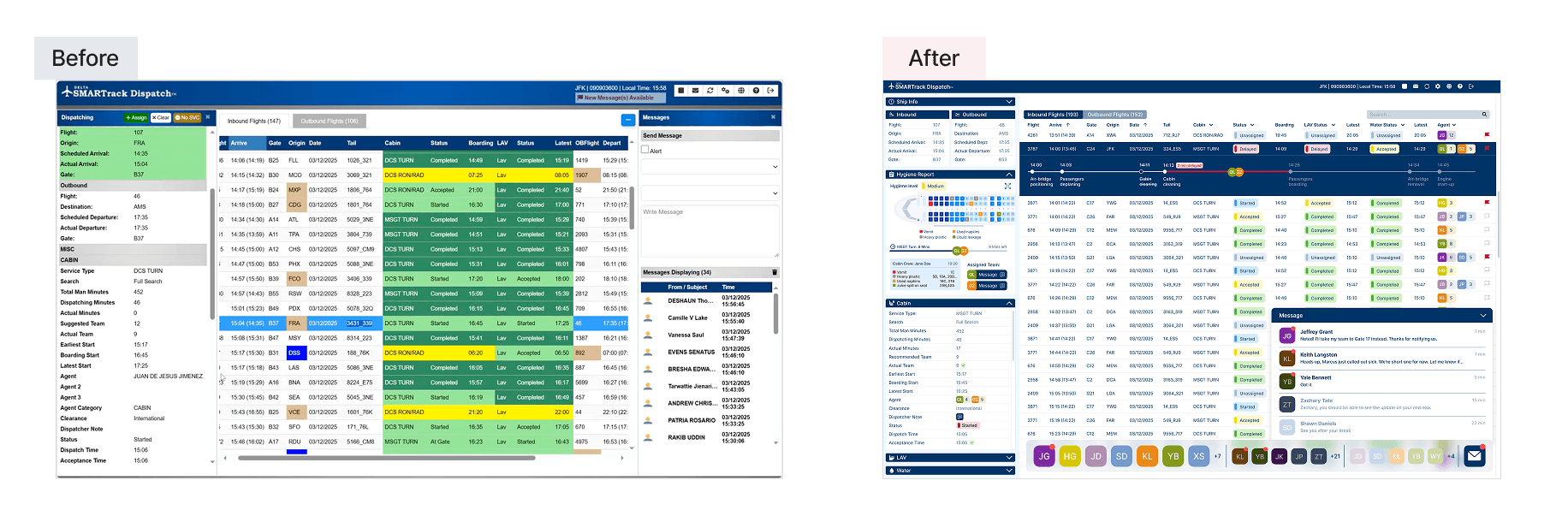
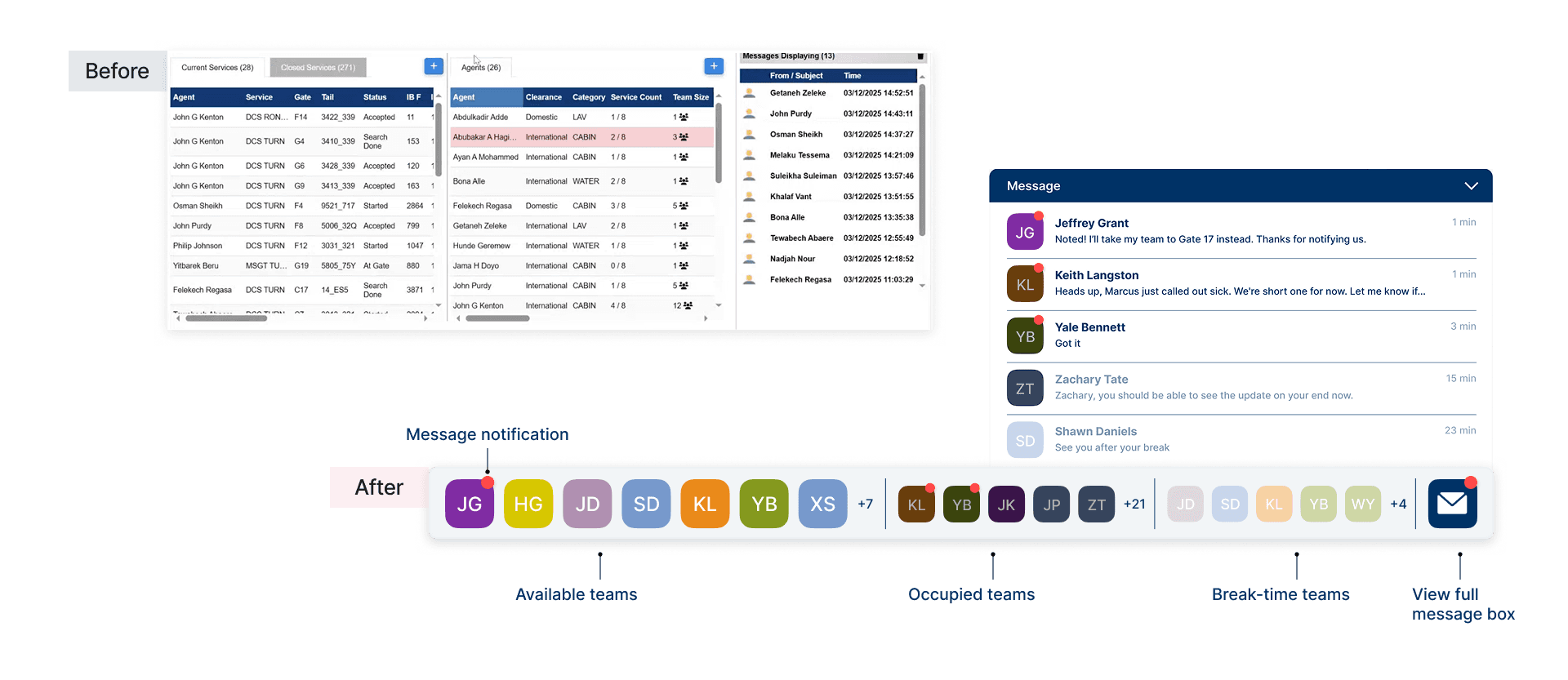
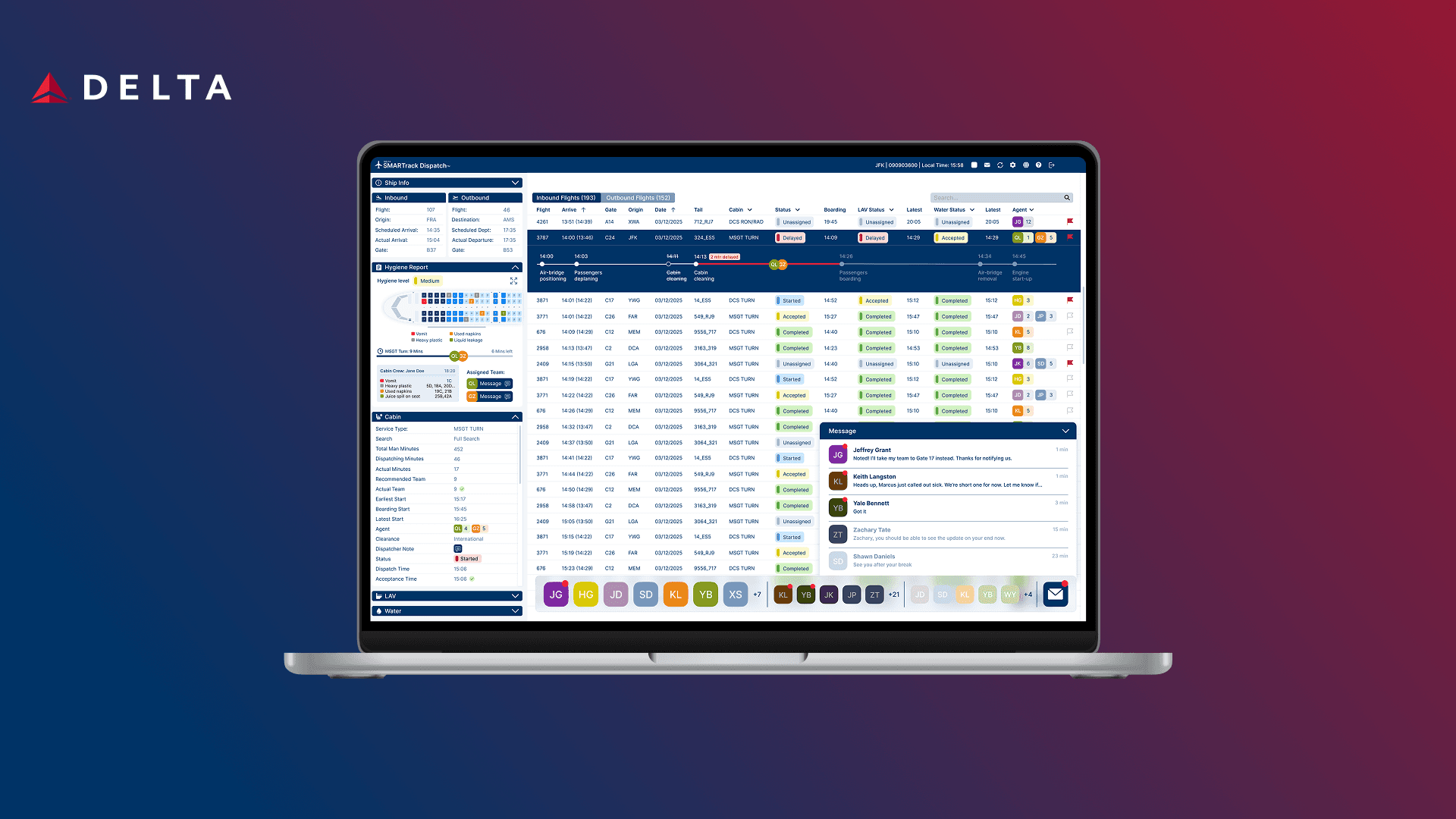
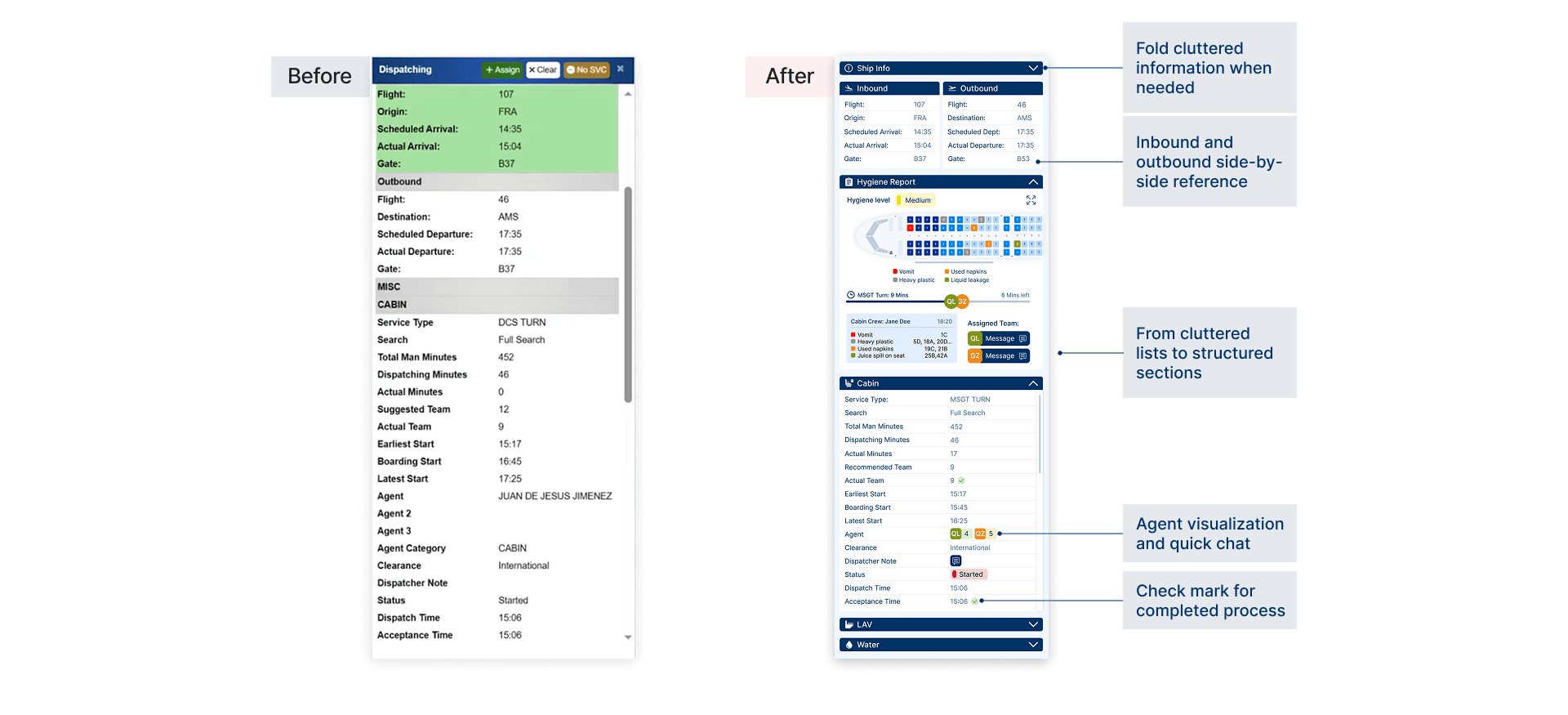
The original Smart Track interface was visually cluttered and lacked information hierarchy, making it hard for dispatchers to quickly find what they needed.
A consistent visual language and semantic color system, clarifying structure and enabling faster information retrieval.
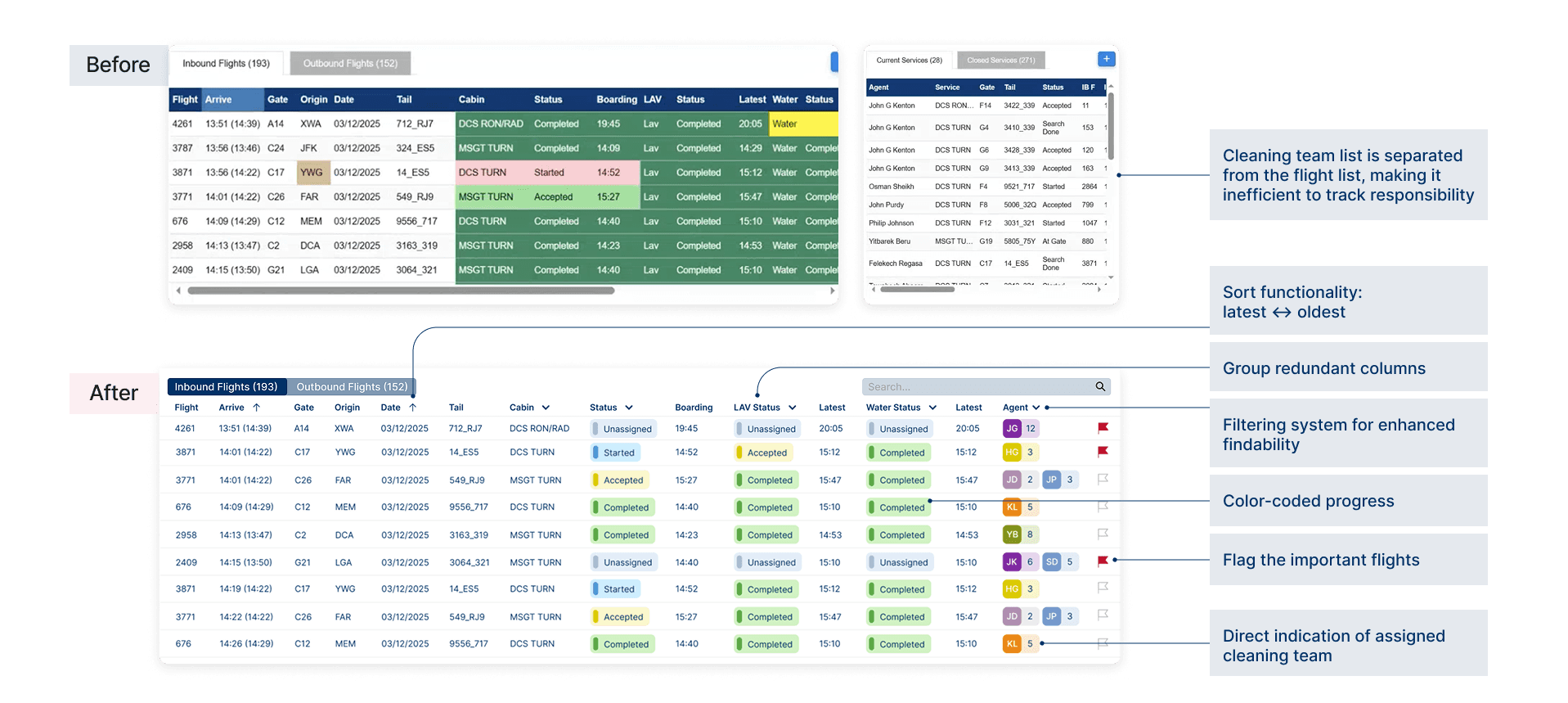
Flight Info Dashboards
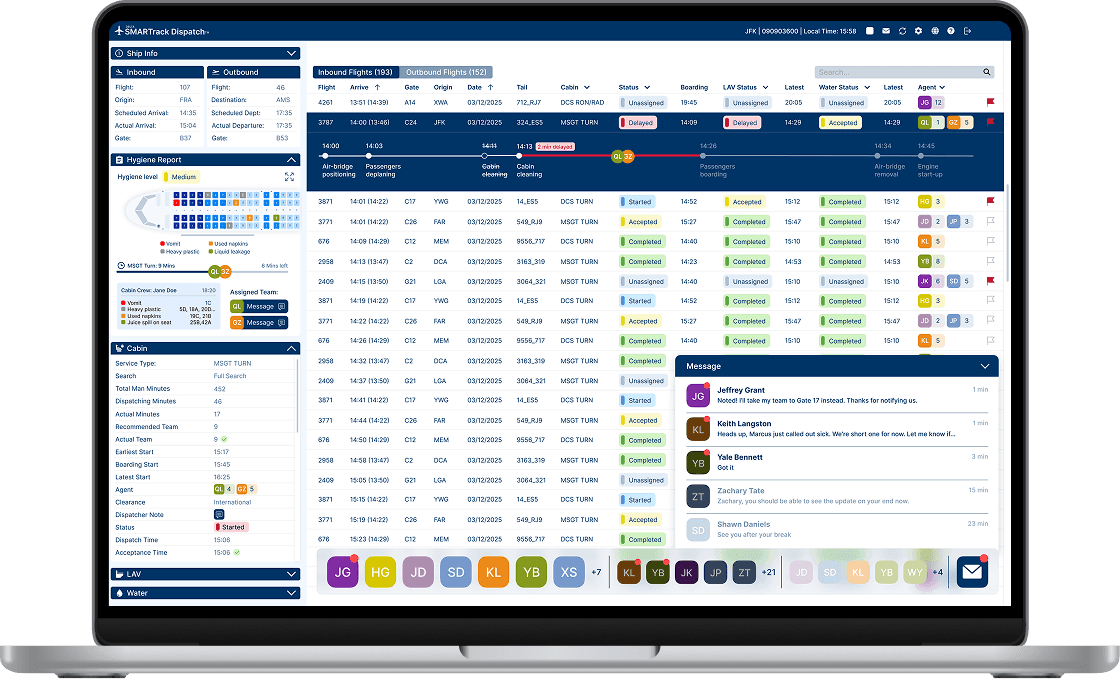
The previous, fixed-width layout forced horizontal scrolling to reach key information, causing users to miss critical content. The redesign consolidates repetitive elements to reduce space, adds richer sorting to offer flexible views, , and introduces agent initials with semantic color coding to improve recognition.
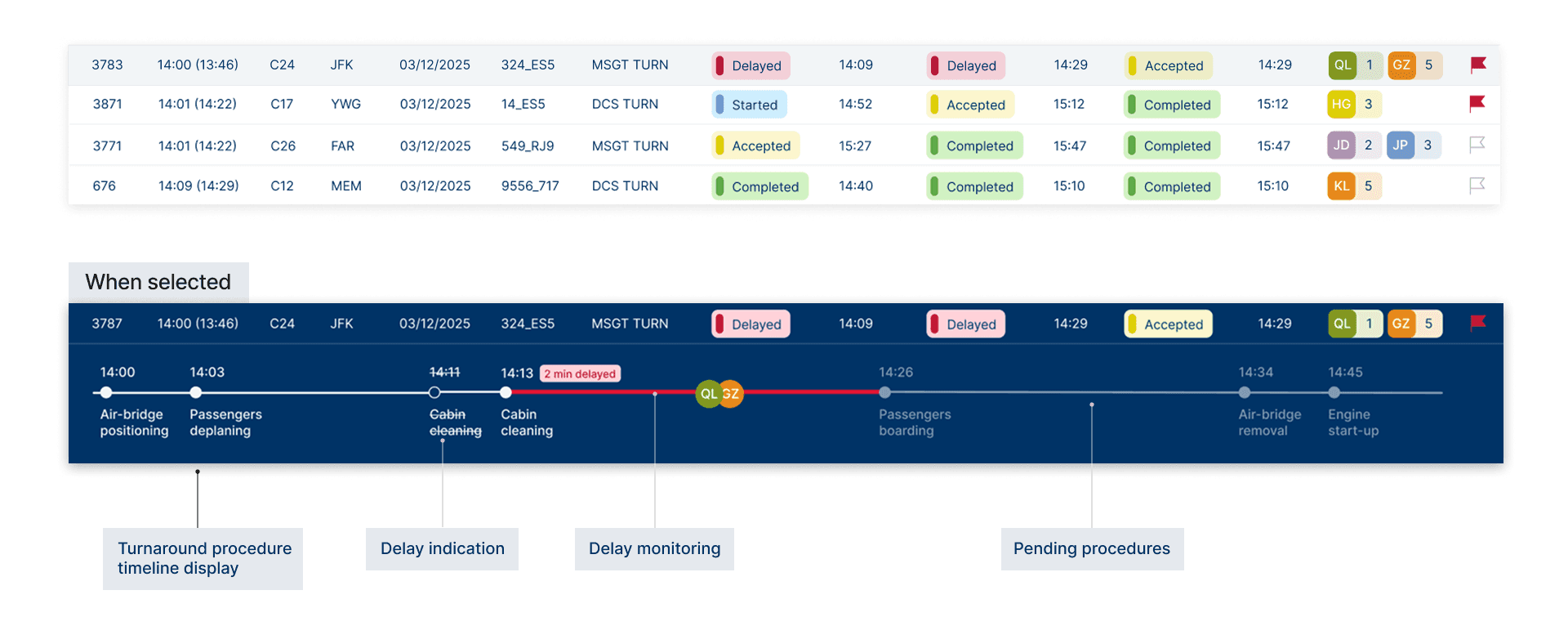
Turnaround Procedure Real-Time Monitoring
Introducing a live turnaround timeline that flags only necessary interventions to keep turnarounds on track.
Flight Detail Section
In flight’s detail page, related information is grouped into collapsible sections, improving visual clarity, reducing scrolling, and helping dispatchers find information more efficiently.
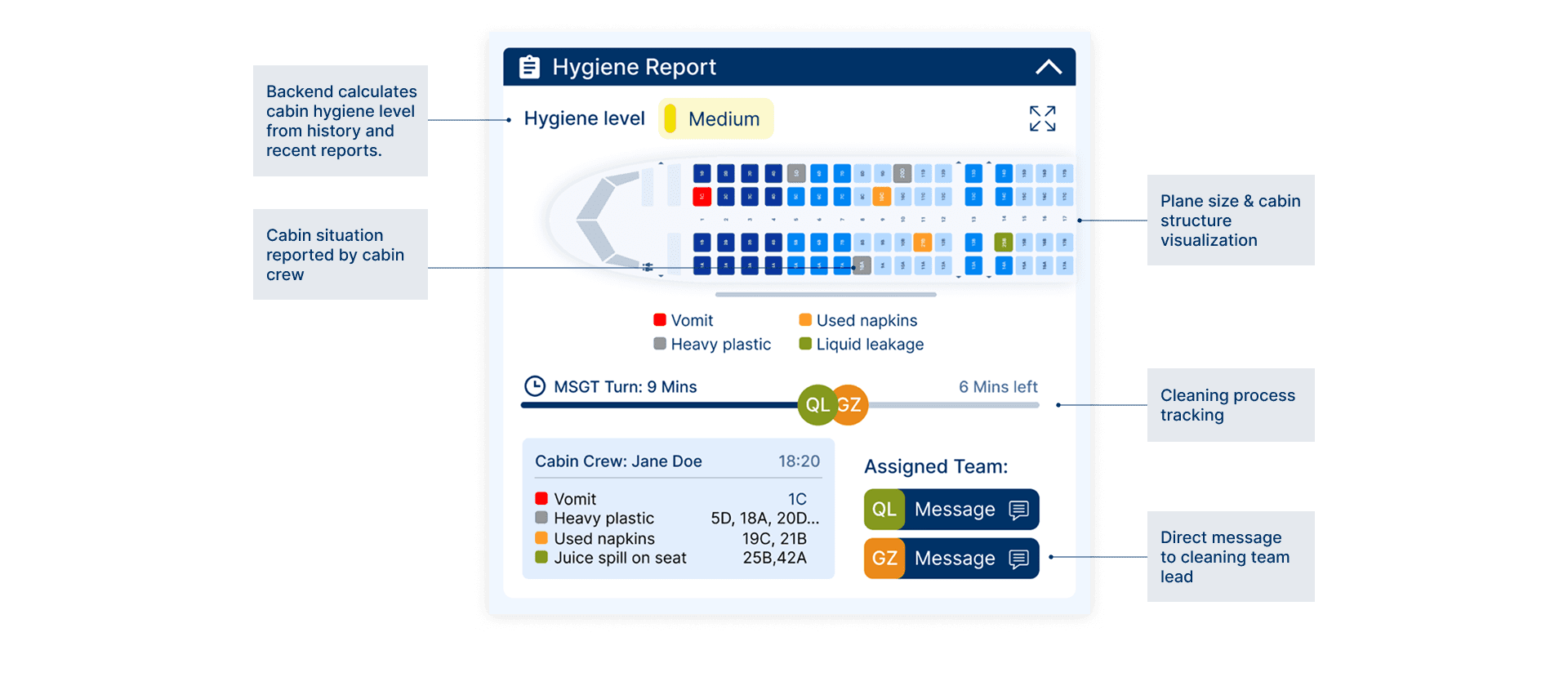
Hygiene Report Section
A new Hygiene Report section presents crew cleaning requests and notes in a structured, visual layout, enabling a clear handoff to the cleaning team and reducing miscommunication. Dispatchers can also message assigned cleaning agents directly from the Hygiene Report Section when needed.
Cleaning Operations Panel
A persistent bottom Teams tab replaces the previous chunked agent section, removing multi-layer navigation to locate agents. The tab offers one-tap access to team status and aligns with dispatchers’ mental model.